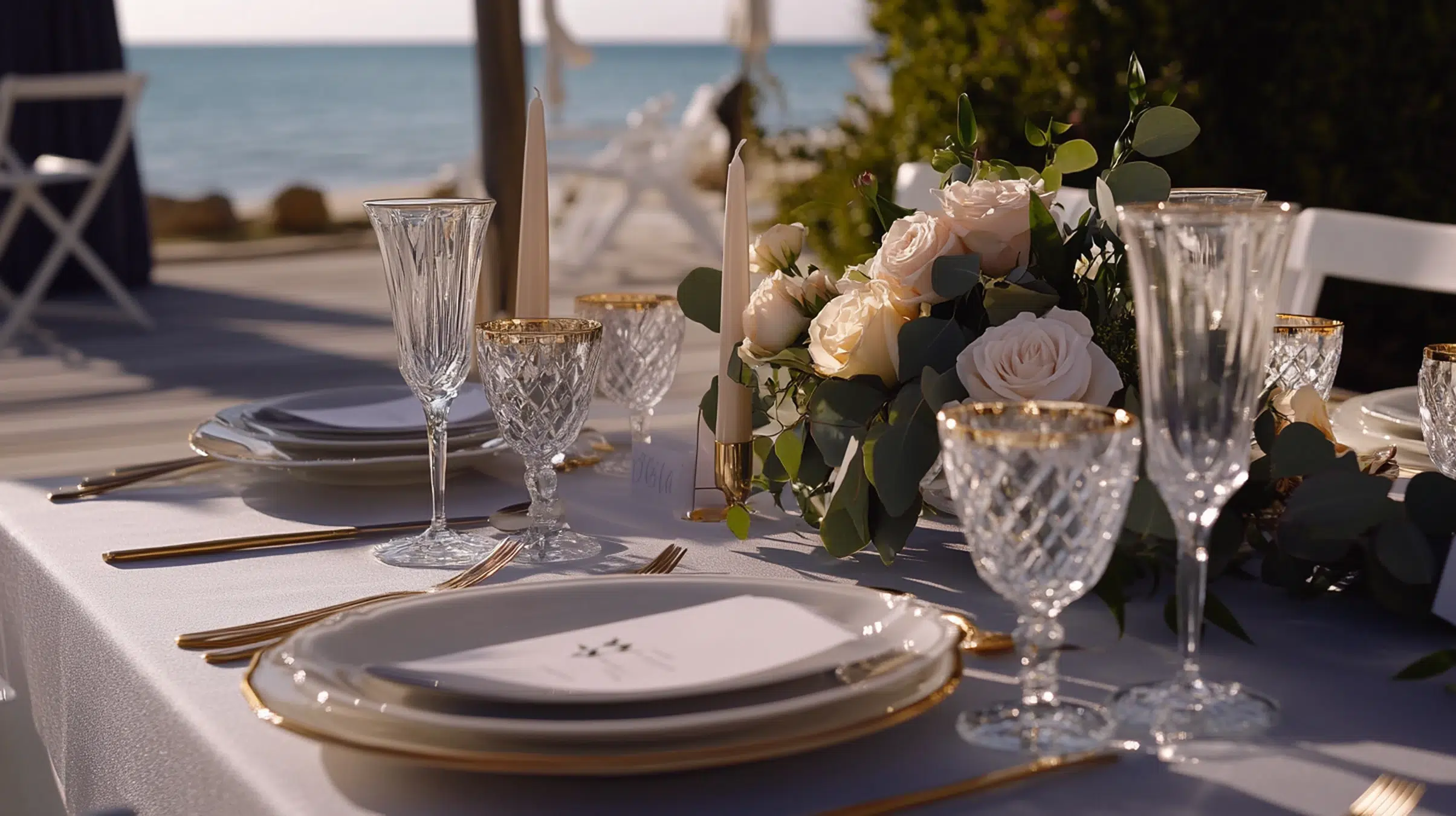
Justifying a seminar costing €290 per person per day is not a question of comfort, but of three concrete factors:
- A price within the market range. 290/day/person is in line with the average for a residential seminar in France (200-400 €/day/person with accommodation). For a 5-star hotel by the sea, this is a contained positioning, not a prestige format.
- An all-inclusive package. The daily amount combines accommodation, catering, room and group time – not an isolated expense line.
- A cost to be compared with the right benchmark. A disengaged employee costs an average of €14,840/year (IBET 2024). A two-day seminar (€580/person) represents around 4% of this amount.
Getting people to accept a seminar budget of €290 per day per person is not a question of “looking good” or offering a pleasant interlude. For an HR team, the challenge is more specific: to demonstrate that a well-designed seminar creates value, that it structures a useful collective time and that it serves a performance objective as much as a human one.
Justifying this budget to the finance department means speaking their language: what are we buying every day, at what market price, and for what effect on the organization? When the seminar is held in a 5-star hotel by the sea, with marine spa, on-site accommodation and gourmet catering, the argument is stronger than it seems – provided you can put a figure on it.
What the 290 € / day / person really covers
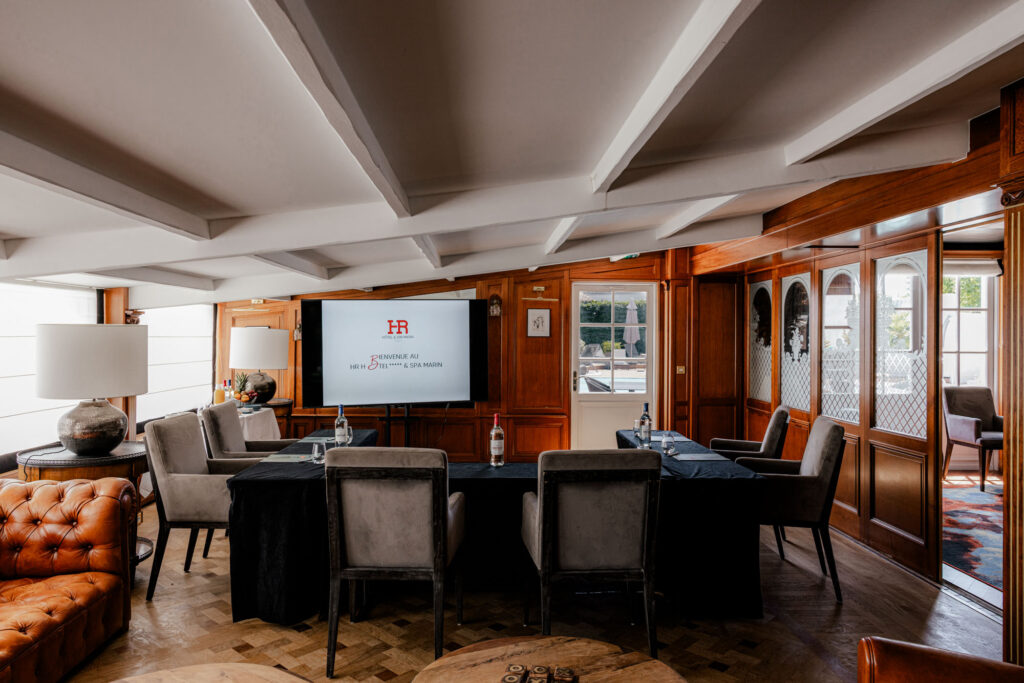
The first mistake when dealing with a CFO is to present €290 as a “comfort” price. This is actually a market rate. In France, the average residential seminar with accommodation is between €200 and €400 per day per person. At €290/day, we’re in the middle of this range – a remarkably contained positioning for a 5-star hotel, when overnight stays alone in top-of-the-range hotels often reach this level.
This daily amount does not buy a service, but a complete device. Typical breakdown for a day:
| Position | Indicative share | What it finances |
|---|---|---|
| Hosting | 40-50 % | Overnight stay, elimination of travel, availability of participants |
| Catering | 25-30 % | Lunch, breaks, dinner – moments of exchange with high relational value |
| Room & equipment | 15-20 % | Workspace, audiovisual equipment, adapted configuration |
| Wellness & surroundings | 5-10 % | Marine spa, swimming pool, attention-grabbing environment |
The right approach is to present the seminar as a coherent whole, not as a succession of budget lines. A seafront location with on-site accommodation reduces logistical dispersion, limits transfers and secures the overall experience. This is what makes a daily cost of €290 so logical.
The only figure that really speaks to a CFO
A finance department doesn’t think in terms of “cost per head”, but in terms of cost/effect. And that’s where an external benchmark changes the conversation.
According to IBET 2024, the index of well-being at work published by Mozart Consulting and calculated on 19.5 million private-sector employees, disengagement costs an average of €14,840 per year per employee in France – an amount that aggregates absenteeism, lost productivity, presenteeism and turnover.
Put into perspective, the trade-off becomes clear: a two-day seminar costing €290/day, or €580 per person, represents around 4% of the annual cost of a disengaged employee. If the event contributes, however modestly, to re-engaging a team, it largely pays for itself. It’s not a comfort expense: it’s an investment in prevention.
Quality of place supports quality of working time
A seminar in a 5-star hotel overlooking the ocean changes the nature of exchanges. The location creates a break with the daily routine, helping teams to break out of their automatisms, focus and take a step back. This is a strong point to emphasize when defending a format that goes beyond the simple meeting.
The Île de Ré seminar page details this seafront location, designed for business events. The message for finance is simple: the environment contributes directly to the efficiency of collective time.
Accommodation turns event into useful residential seminar
The home extends the useful duration of the meeting. Dinners, evenings and breakfasts become high-value exchange times. It’s often here that the most fundamental issues come to the fore and cohesion is built. As accommodation accounts for 40-50% of the budget, it’s also the item that distinguishes a seminar that produces results from one that is forgotten.
In a hotel offering rooms and suites, accommodation is not an additional comfort: it avoids the need to go back and forth, protects participants’ energy and keeps the focus on the content.
Restoration reinforces the perception of value
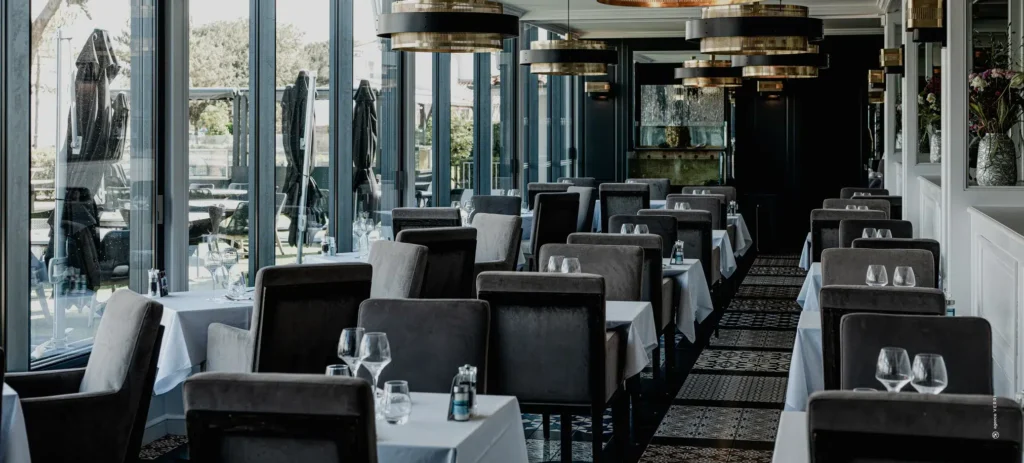
Careful catering isn’t just about “pleasing guests”. It adds coherence to the experience and sends a clear signal that the company considers this time to be strategic. The establishment’s gourmet restaurant, presented on the Île de Ré event page, is part of this logic of a complete experience, without having to multiply the number of events.
The right HR arguments to defend this budget
A €290 seminar is more defensible when linked to a precise HR objective: collective onboarding, launch of the new year, managerial transformation, recognition after an intense period. The clearer the objective, the more legitimate the budget.
- Reinforce commitment: a well-kept environment enhances the contribution of teams.
- Creating cohesion: informal times count just as much as workshops.
- Making it easier to speak out: a quality venue relaxes exchanges without trivializing them.
- Mark a milestone: strategic launch, year-end closing, management seminar.
The marine spa is not a decorative bonus: it’s a recovery time that avoids the “seminar too dense” effect, particularly useful for maintaining a high level of attention over two days.
Present your case without overdoing the luxury factor
The finance department expects a structured file: an objective, a framework, a justification, a spending logic. Four angles to include in your note:
- Business or HR objectives: why this seminar?
- Choice of location: what does a seafront setting actually offer?
- Budget breakdown: the €290 grid item by item.
- Expected impact: cohesion, commitment, managerial alignment, recovery.
To provide a framework for organization, our practical guide to organizing your company seminar reminds you that a successful seminar is based on structured choices, not on a simple desire to get away from it all.
Frequently asked questions
Is the budget of €290/person high for a seminar?
No. It falls within the market range for a residential seminar with accommodation, generally between €200 and €400 per day per person*. For a 5-star establishment facing the sea, this is a contained positioning. ( * sources : https://tripla.fr/combien-coute-un-seminaire-dentreprise-en-2025/ – https://evenementiel-des-hippodromes.fr/budget-organiser-seminaire-entreprise-qualite/)
What exactly does the €290 cover?
A complete package: accommodation (40-50% of the budget), catering, room and equipment, access to the environment and well-being. This is not an isolated expense, but a daily package.
How do you convince a skeptical finance department?
By comparing it to the right benchmark. A disengaged employee costs an average of €14,840/year(IBET 2024; https://www.ibet.fr). A two-day seminar at €580/person represents around 4% of this amount: a high-leverage investment, not a cost.
Does a marine spa fit into a seminar budget?
Yes, presented as a recovery time in a dense program. It does not replace the content, but supports the quality of attention over time.
Why a 5-star hotel overlooking the sea rather than a traditional venue?
Because a break from everyday life encourages concentration and memorization of the event, while reinforcing the company’s image with its teams.
Conclusion
To justify a seminar costing €290 per person, you need to get away from the “cost per head” reflex and think in terms of experience value and avoided cost. The budget becomes legible as soon as you break it down item by item and compare it with the real benchmark: that of disengagement.
To build a credible case, rely on a precise objective, a clear budget and a coherent framework. To take action, visit the Île de Ré seminar page.